- 4009 Hackney Springs Ln, Sachse, TX 75048


Need Support?
- 4009 Hackney Springs Ln, Sachse, TX 75048
Need Support?
TransLabs’ lab-specific RCM automation solutions automate your entire revenue cycle from patient registration through payment posting, freeing your team to focus on complex issues while dramatically improving speed, accuracy, and cash flow.

Legacy billing workflows are silently costing your practice tens of thousands each year in errors, delays, and staff overhead. TransLabs’ AI-powered RCM Automation changes everything

$60K–$90K+ in Annual Staffing Costs Plus benefits, turnover, and retraining expenses
20–35% Average Claim Denial Rate Coding errors, eligibility gaps & missed deadlines kill revenue
Revenue Halts When Staff Are Away Sick days, vacations & turnover create dangerous billing gaps
Slow, Error-Prone Manual Data Entry Human keying errors trigger denials, audits & compliance risk
Inconsistent follow-up leaves aging A/R untouched, eroding collections and cash flow.

Performance-Based Pricing You only pay when we perform. Zero overhead, 100% accountability
98%+ First-Pass Clean Claim Rate RPA bots validate, scrub & submit claims with near-zero human error
365-Day, 24/7 Uninterrupted Revenue Cycle Bots never call out sick; your billing never misses a beat
Intelligent Automated Data Processing AI-OCR + RPA bots process superbills, EOBs & ERAs in seconds
Automated A/R follow-ups and rule-based denial management with real-time tracking.











































TransLabs provides expert RCM services to clinical laboratories in all 50 states, delivering the same exceptional results whether you’re a community hospital lab or a large reference facility. We bring specialized lab billing expertise to facilities nationwide, combining remote efficiency with hands-on partnership.
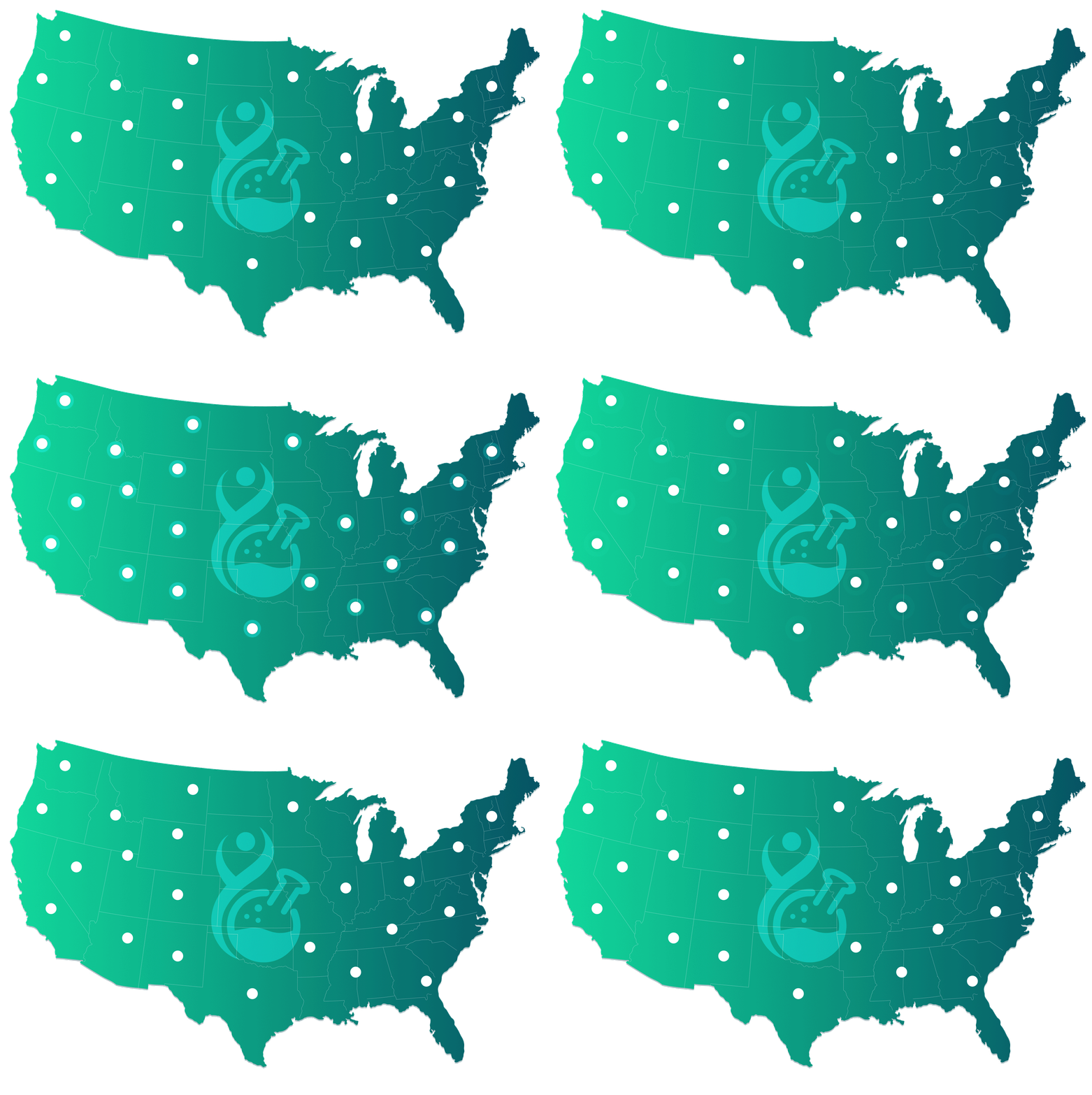
Generic billing is the fastest way to a 15% denial rate. TransLabs delivers specialty-specific revenue integrity designed to capture every dollar you’re owed.
Certified security you can trust with every claim & every record.




Labs lose revenue to preventable denials; miscoded panels, missed modifiers, payer-specific mismatches. TransLabs built its billing process around what labs actually need to get paid, coast to coast. Start with a complimentary claims audit. We’ll review your CPT/HCPCS coding, test methodology, and denial trends to show you exactly what’s recoverable.
Claims checked against your MAC's local coverage rules before submission.
Medicaid and commercial prior-auth rules built into your workflow, not discovered after denial.
Appeals strategy built from denial data across all 50 states.
A dedicated billing specialist; never a shared call queue.
Live in 24 hours. No contracts. No upfront fees.
RPA operates at the user interface level, interacting with existing systems exactly as humans do; by clicking buttons, entering data and navigating screens. Traditional automation requires expensive custom integrations, API development, and system modifications. RPA deploys in weeks without changing your LIS, billing software, or workflows. It’s technology-agnostic, working with any system your staff can access, making it faster, less expensive, and less disruptive than traditional IT integration projects.
No, RPA augments staff by handling repetitive, rule-based tasks, allowing your team to focus on complex issues requiring human judgment such as appealing difficult denials, negotiating with payers, resolving complex billing scenarios and providing customer service. Most laboratories reduce staff through attrition rather than layoffs, reassigning existing employees to higher-value activities like denial management, contract analysis, or revenue optimization. The result is a more satisfied, engaged team focusing on strategic work rather than data entry drudgery.
RPA bots achieve 99% accuracy for rule-based tasks compared to 99% human accuracy for manual data entry. Bots don’t make transposition errors, forget steps, or apply rules inconsistently. They execute identical processes the same way every time. However, bots handle clearly-defined, repetitive tasks, not complex judgment calls. That’s why TransLabs RPA includes exception handling where bots flag scenarios requiring human expertise, combining bot precision with human intelligence for optimal results.
RPA bots include sophisticated exception handling that identifies scenarios outside their programmed rules and automatically routes them to appropriate human specialists. For example, if a bot encounters an eligibility verification error it cannot resolve, it flags the issue, provides details, and sends it to a staff member’s worklist for resolution. Exception rates typically run 5-15% initially and decrease over time as bots learn from new scenarios added to their rule sets.
Most laboratory RPA implementations complete in 4-6 weeks from kickoff to full production. The timeline includes process analysis (1-2 weeks), bot development and testing (2-3 weeks), and parallel operation (1 week) before complete transition. This rapid deployment is possible because RPA doesn’t require system integration or custom development; the bots interact with existing systems as-is. Some laboratories start with pilot projects (2-3 weeks) to demonstrate value before full-scale implementation.
RPA is technology-agnostic and works with virtually any system your staff can access like LIS platforms (EPIC Beaker, Sunquest, Cerner, Soft Computer), billing software, clearinghouses, payer portals, practice management systems, and legacy applications. If a human can perform a task through a user interface, RPA bots can automate it. TransLabs has deployed RPA across dozens of different LIS and billing system combinations without requiring changes to underlying systems.


